
Updated
Quick answer
If you only want one answer, buy the running shoe that fits comfortably, feels stable at your normal pace, and matches the run you will do most often. For most runners, that means a daily trainer before a race shoe, plated shoe, trail shoe, or extreme stability shoe. The best shoe is not the one with the loudest review or newest foam. It is the shoe that works for your foot, your pace, your weekly mileage, your surface, and your actual running mechanics. Run-It adds that last layer by using supported Garmin or Stryd running data to narrow daily trainer, tempo, and race shoe shortlists. The result is an informed starting point, not a medical prescription, injury-prevention promise, fit guarantee, or performance guarantee.
Which shoe type should you buy first?
The useful first question is not "what is the best running shoe?" It is "what run am I buying this shoe for?" Start with the pair that solves your most frequent training need, then add faster or race-specific shoes when your running actually calls for them.
That is why comfort still belongs at the start of the decision: Run-It's daily trainer comfort analysis found comfort was the reason runners named most often for liking a daily trainer they rated 7/10 or higher, chosen by roughly 2 in 5 of the runners who gave a reason.
First pair
Choose a comfortable daily trainer that feels secure through the heel and midfoot, leaves toe room, and feels smooth at easy pace.
Workout shoe
Buy a faster trainer only when you actually run workouts, strides, threshold sessions, or races where a daily trainer feels heavy.
Race shoe
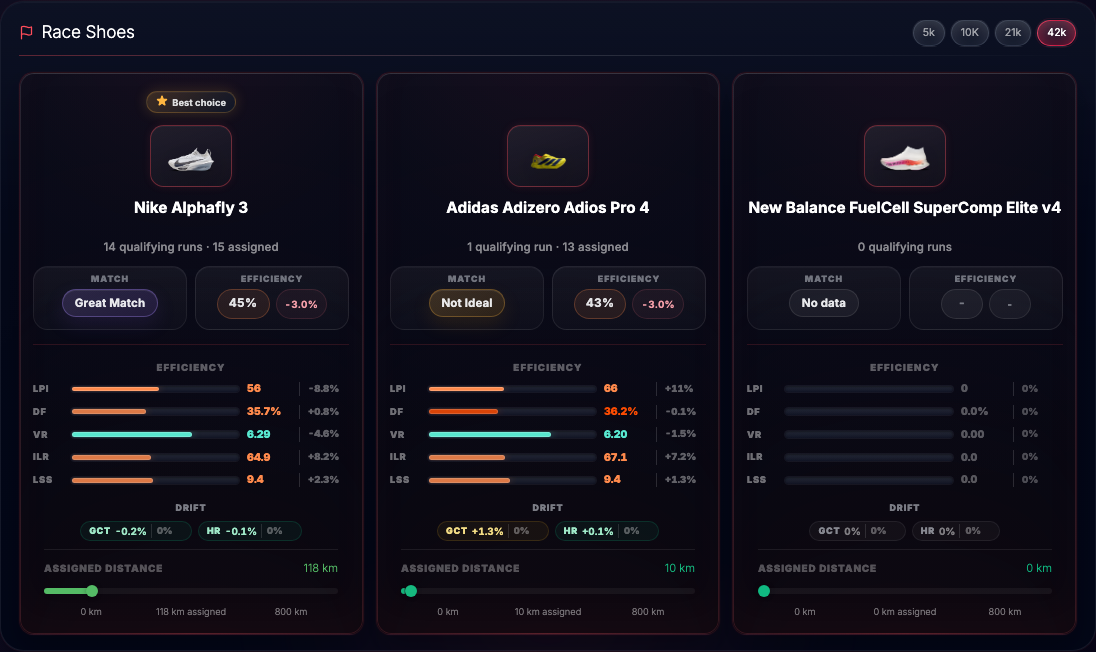
Use a race shoe for a race goal only if it feels stable at target pace and does not force your mechanics. For marathon blocks, fold it into a daily, tempo, and race shoe rotation.
Do you need a race shoe?
The short answer
Most runners do not need one, and the ones who benefit are easy to identify: you have a race on the calendar, you already own a trainer that handles your everyday mileage, and you run at least some sessions at a pace where a daily trainer starts to feel like it is holding you back. Miss any of those three and a race shoe will spend its short life doing a job your daily trainer already does better. Buy the second daily trainer first. If you own exactly one pair of running shoes, that is almost always the higher-value purchase, because it covers more of your week and lets each pair dry out between runs.
The two categories are built for different things, and runners describe them in different language. In Run-It's shoe feedback, the runners who liked a daily trainer overwhelmingly named comfort. Among those who liked a race shoe, responsiveness dominated instead, while comfort still placed second. The interesting part is what almost nobody credited: weight was named by only a small minority of race-shoe owners, despite being the number every race shoe is marketed on.
| If this is you | Buy this next | Why |
|---|---|---|
| You own no running shoes | Daily trainer | It covers every run you will do in your first year, including the races. |
| You own one pair and run 3 to 5 times a week | A second daily trainer | More weekly coverage than a race shoe, and both pairs last longer. |
| You run workouts, but no races | A faster trainer | You get the lively ride for weekly sessions without paying race-shoe prices for it. |
| You have a goal race and a trainer you trust | Race shoe | This is the case the category exists for. Test it in training first. |
| Your daily trainer feels heavy at every pace | A different daily trainer | A race shoe would mask a shoe that is wrong for your everyday running. |
| You want your easy runs to feel better | Daily trainer | Race shoes tend to feel flat and unrewarding at easy pace. |
One rule survives every row: a race shoe is a race-day tool that needs rehearsing. Run at least two or three sessions at goal pace in it before the race, and treat anything that feels sharp or unstable in those runs as a reason to race in your trainer instead. For marathon blocks, the same logic extends into a full daily, tempo, and race shoe rotation.
Fit eliminates more shoes than specs do
Specs can narrow the field, but fit decides. A good running-shoe fit usually has enough toe room, midfoot hold without lace pressure, heel security without rubbing, width that does not squeeze or slide, and no sharp pressure under the arch, forefoot, heel, or outside edge.
Do not judge fit only while standing. Walk, jog, turn, and do a few short accelerations if possible. Some shoes feel soft in the store and strange once pace changes. Others feel ordinary at first and then disappear during a run.
Neutral, stability, cushioning, and drop
Do not buy a stability shoe only because someone watched your ankle roll inward for a few seconds. Pronation is normal. The practical question is whether a more guided platform feels better across repeated runs. If neutral shoes feel comfortable and controlled, start neutral. If neutral shoes repeatedly feel unstable or sloppy, try a stable daily trainer or stability shoe.
Cushioning, heel-to-toe drop, and stack height also change the ride. More cushioning can protect long easy runs, but too much softness can feel unstable for some runners. A sudden move to much lower drop can load the calf and Achilles differently. Change one major variable at a time so you know what caused the response.
Where Run-It fits
A store fitting lets you try shoes on. Reviews can help narrow the market. Online forums can reveal common fit issues. None of those sources know how your mechanics respond across real training. Run-It is the data-based layer between generic advice and the final purchase, and it can suggest your size in another brand from a pair that already fits.
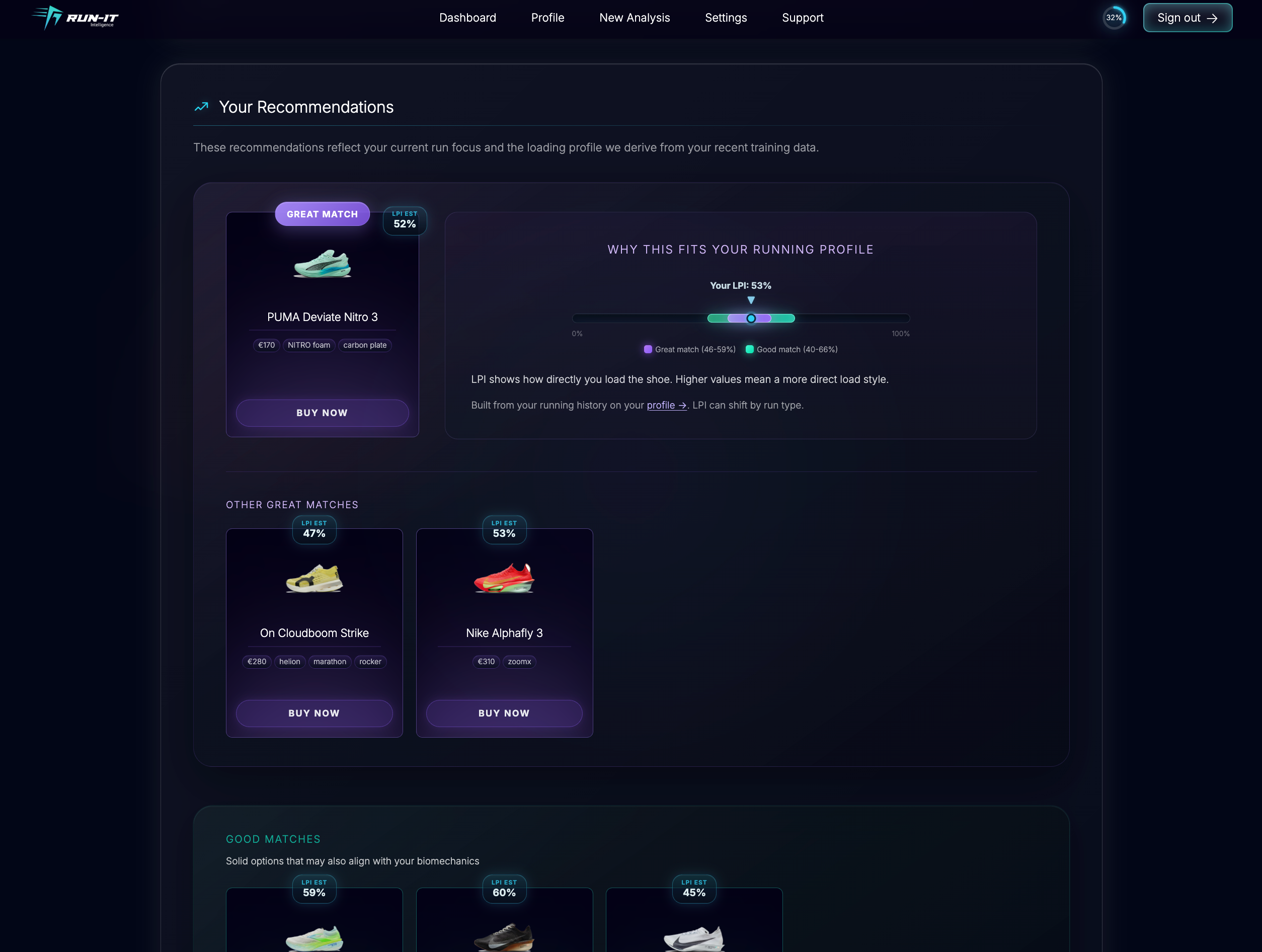
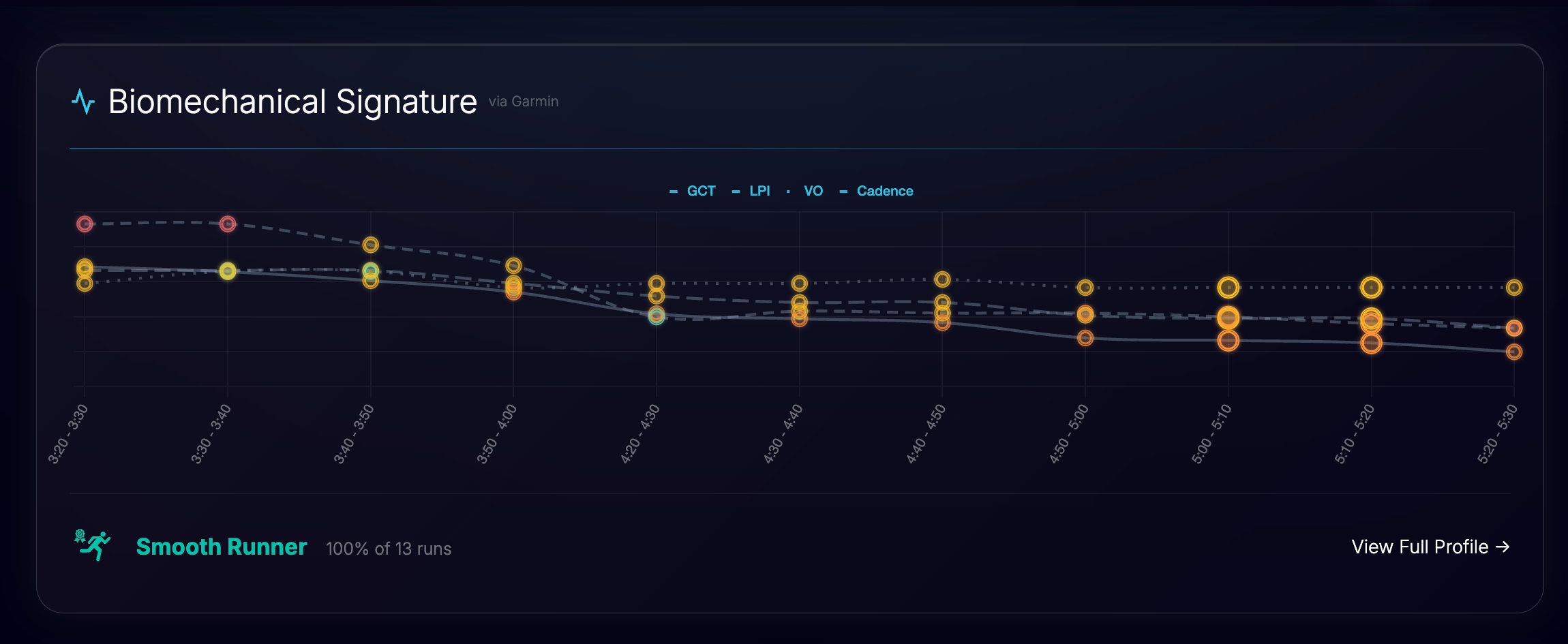
Run-It analyzes supported Garmin or Stryd activity data such as pace, cadence, ground contact time, vertical oscillation, stride length, fatigue context, and shoe purpose. It then creates road-shoe shortlists for daily trainer, tempo, and race use.
Where can I get running shoe advice online?
Use broad review sites when you need model comparisons, durability notes, price checks, or tester opinions. Use Run-It free online running shoe analysis when the question is which shoes are more likely to match your own running data.
Buying checklist
- What job is this shoe for: daily, long run, workout, race, or trail?
- Does it fit your heel, midfoot, width, and toe room while moving?
- Does it feel stable at your normal pace and late in a run?
- Are you changing too many variables at once?
- Would you trust it for an ordinary easy run tomorrow?
FAQ
What running shoes should beginners buy?
Beginners should usually buy a comfortable daily trainer. It should fit well, feel stable at easy pace, and avoid extreme ride features unless there is a clear reason.
Should I buy neutral or stability running shoes?
Start with the shoe that feels comfortable and controlled. Stability shoes can be useful, but a quick pronation label should not be the only reason to buy them.
Should I buy carbon-plated running shoes?
Buy carbon-plated shoes if you have a race or workout use case and they feel stable at your target pace. They are usually not the best first or only pair.
Do I need a race shoe?
Only if three things are true at once: you have a race on the calendar, you already own a daily trainer that covers your normal mileage, and you run some sessions fast enough that the trainer feels like it is slowing you down. If you own one pair of running shoes, a second daily trainer is usually the better buy, because it covers more of your week and lets both pairs recover between runs.
What is the difference between a daily trainer and a race shoe?
A daily trainer is built to feel good across repeated easy mileage, and runners who like theirs almost always name comfort as the reason. A race shoe is built to feel lively at goal pace, and runners who like theirs overwhelmingly name responsiveness. That difference explains why a race shoe can feel dead and unrewarding on an easy run: it is doing a job that easy pace never asks for.
Can I just race in my daily trainer?
Yes. Runners have raced every distance in daily trainers for decades, and a trainer you trust will beat a race shoe you have never rehearsed in. If a race shoe feels sharp, unstable, or unfamiliar in the sessions leading up to the race, racing in the trainer is the lower-risk choice.