
Quick answer
Review sites such as RunRepeat and The Run Testers tell you how a shoe behaves in a lab or for an experienced tester. Run-It tells you how shoes behave for you, from your own Garmin, Stryd, Apple Watch or Strava runs. If you are looking for an alternative, use reviews to build a shortlist and your own run data to decide.
Why runners look for an alternative to review sites
A good review answers “what is this shoe like?”. It cannot answer “what is this shoe like for me?”. Two runners can read the same review and need different shoes, because they run at different paces, land differently and use the shoe for different jobs.
That is the gap most people mean when they search for alternatives to RunRepeat or The Run Testers. They do not need fewer reviews. They need a way to turn general opinions into a choice that fits their own running.
What review sites do well
RunRepeat says it has tested more than 1,000 shoes in its lab, using base standards such as ASTM F1976-13 for energy return and shock absorption and SATRA TM144 for traction, at a controlled 20°C and 55% humidity. It adds wear-tester opinions to the lab results.
The Run Testers are running, fitness and tech journalists who test kit for many publications and run in it day to day. They review shoes, watches and gear on their website, on YouTube and in a podcast.
If you want to know a shoe’s weight, stack height, drop, foam softness or how it compares with last year’s version, a review site is the right place to look. Run-It does not test shoes in a lab and does not replace that.
What a review cannot know about you
- Your paces. A shoe that feels lively at a tester’s tempo pace can feel flat at yours.
- How you land. Ground contact time, vertical bounce and landing impact differ a lot between runners at the same speed.
- Your heart rate at the same pace. Whether you work harder or easier in one shoe than in another only shows up in your own runs.
- How your form holds up when tired. Many runners change late in a long run. A review run is rarely your long run.
- The shoes you already own. The best next shoe depends on the gap in your rotation, not on the best shoe overall.
The chart above shows why this matters. When Run-It asked runners for the single most important reason they liked a race shoe, 61 of 114 picked responsiveness (53.51%). Only 5 picked weight (4.39%), the spec every race shoe is launched on and every review lists first. What runners value most is how the shoe responds at their own pace, and that is the part a review cannot measure for you. The full data is in why runners like race shoes.
What Run-It does instead
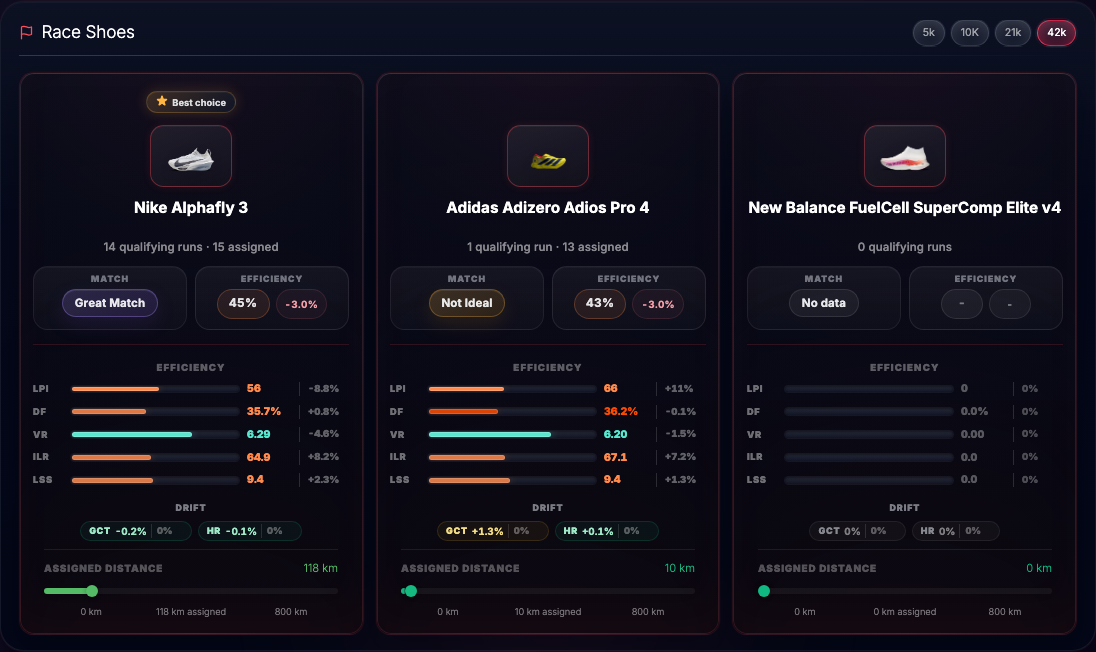
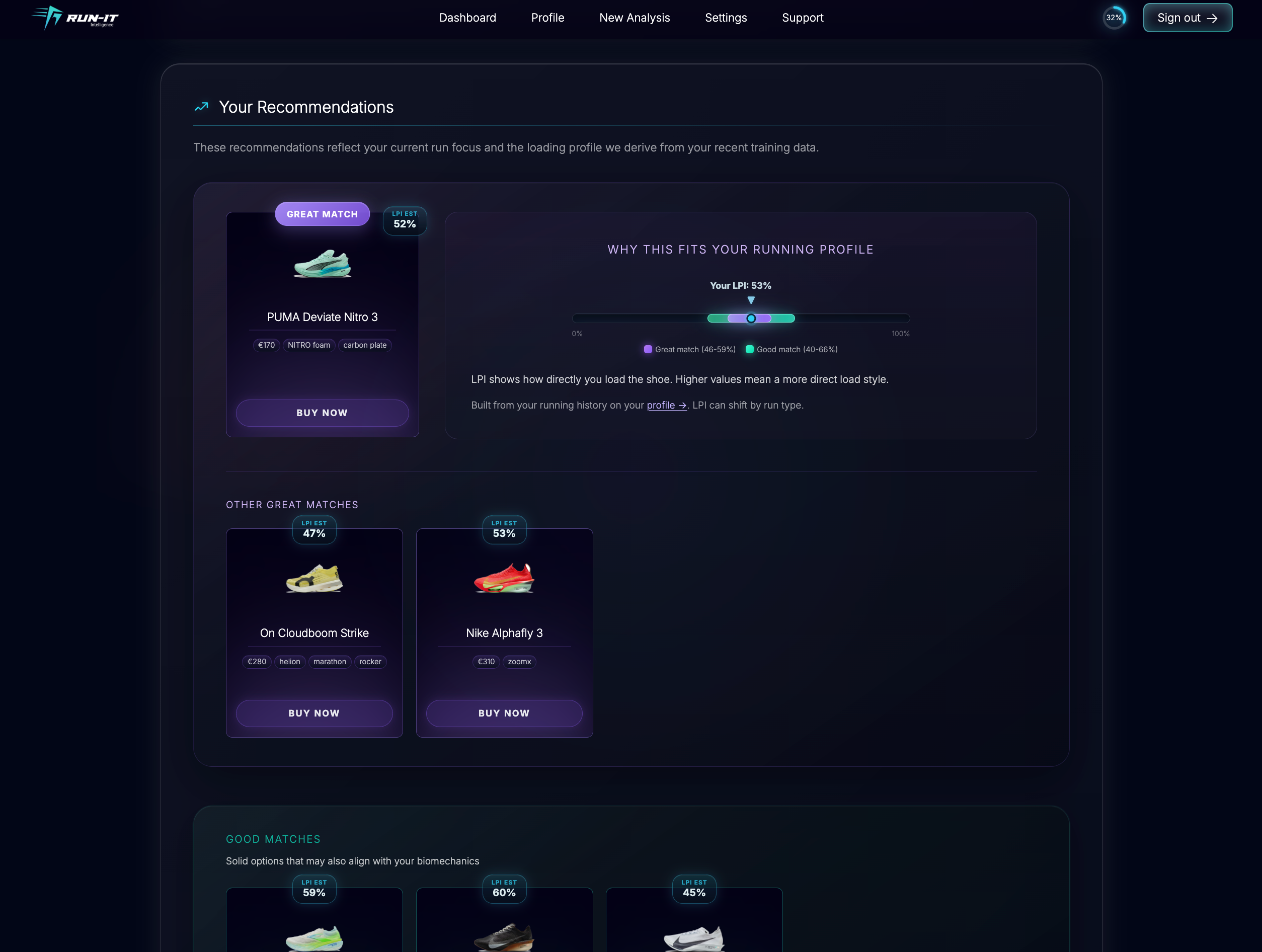
Run-It reads the runs you already record. Connect Garmin, Stryd, Apple Watch or Strava, or upload a FIT file, and Run-It looks at your pace, cadence, ground contact time, vertical movement, stride length and how they change as you tire. From that it suggests road running shoes for daily training, tempo sessions and race day.
For shoes you already own, Run-It gives each pair a Shoe score from 0 to 100. It compares your heart rate and landing impact in that shoe with your usual values at the same pace, so a shoe you only wear on easy days is not unfairly compared with your race shoe.
Review sites vs Run-It at a glance
| Review sites | Run-It | |
|---|---|---|
| Whose data | A lab and the reviewers | Your own runs |
| What it measures | The shoe: weight, stack, foam, traction, fit notes | You in the shoe: pace, contact time, bounce, landing, heart rate |
| Best for | Shoes you have never run in, new releases, specs | Choosing for your paces, comparing shoes you own |
| Limits | Cannot know your running | Needs recorded runs; road shoes only, no lab specs |
Competitor details come from their own pages, checked on 2 November 2026. Sources are listed below.
How to use both
Shortlist with reviews. Use lab data and tester opinions to drop shoes that are clearly wrong for the job: too heavy, too firm, or the wrong fit.
Decide with your own data. Check which shoe types suit your paces and landing, and what your rotation is missing.
Check after a few runs. Once you own the shoe, compare it with your other pairs at the same pace instead of relying on first impressions.
Reviews describe the shoe. Your runs describe you in the shoe.
The most useful alternative to a review site is not another review site. It is the data from your own watch or pod, read at your own paces, used next to the reviews you already trust. For shop-based testing, see Run-It vs in-store gait analysis.
FAQ
What is a good alternative to RunRepeat or The Run Testers?
If you want more reviews, other review sites and forums cover similar ground. If you want a choice based on your own running, use your watch or pod data. Run-It reads your Garmin, Stryd, Apple Watch or Strava runs and suggests road shoes for your paces.
Are RunRepeat reviews accurate for me?
Lab results describe the shoe under fixed test conditions, which makes shoes easy to compare. They cannot tell you how your pace, landing and fatigue interact with that shoe.
Can Run-It tell me how a shoe I have never run in will feel?
Not how it will feel. It can suggest which shoe types suit your paces and running pattern. Once you have run in a shoe, it can compare it with your other shoes at the same pace.
Should I stop reading shoe reviews?
No. Reviews are the best source for specs, fit notes and new releases. Use them for the shortlist and your own data for the final choice.
Sources
- RunRepeat, Footwear testing services and About, accessed 2 November 2026.
- The Run Testers, Meet The Run Testers and Our mission, accessed 2 November 2026.